
Retirement vs. College Savings for a High-Income Oregon Family
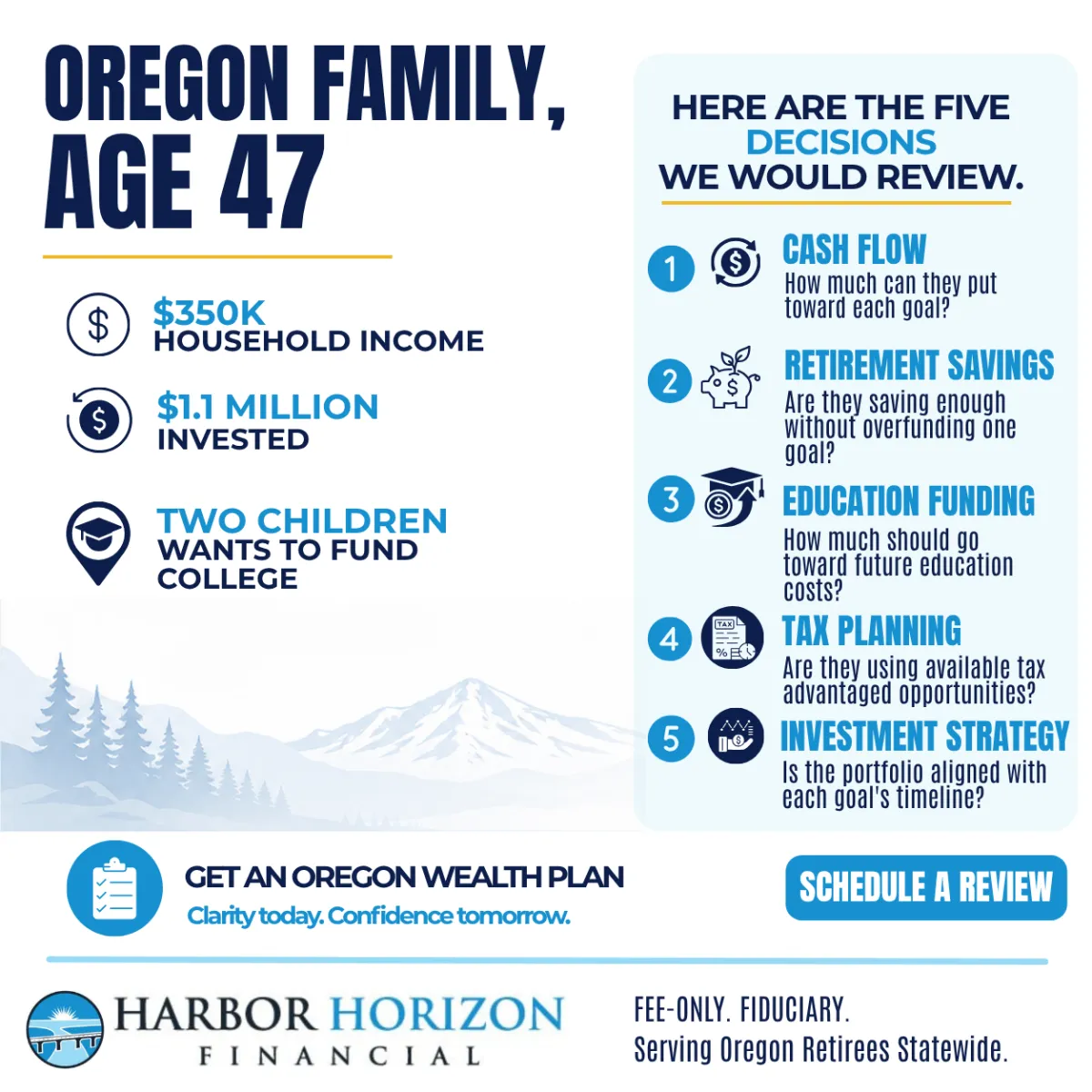
A household earning $350,000 with $1.1 million invested may appear to be in excellent financial shape. But with two children, future college expenses, retirement goals, and Oregon taxes, they still face an important question:
Where should their next dollar go?
This hypothetical scenario illustrates several financial-planning considerations for an Oregon family in their late 40s.
Household Snapshot
Age: 47
Household income: $350,000
Invested assets: $1.1 million
Children: Two
Primary goals: Retirement, college funding, and tax planning
1. How Much Should Go Toward Retirement?
The first step would be determining what retirement they are working toward. When would they like to retire? How much would they like to spend? Are their current investments and future contributions likely to support that lifestyle?
Without those answers, it is difficult to know whether they should save more for retirement or have flexibility to direct money toward college, travel, and other priorities.
We would also consider where they are saving. A family can accumulate substantial retirement assets while having limited money available outside retirement accounts. Building taxable investments may provide additional flexibility for goals before age 59½ or during the early years of retirement.
2. How Much College Do They Want to Fund?
Before setting a 529 contribution target, the parents should decide what they want to provide.
Funding four years at an Oregon public university is a different goal from paying for private school, graduate school, or every education-related expense. Once the family defines its desired level of support, they can estimate the required savings and balance it against retirement.
Most families want to fund as much as possible without sacrificing their own long-term financial security.
3. Are Their Accounts and Investments Working Together?
At this income level, taxes affect many of the family’s decisions. Areas to review could include:
Traditional versus Roth retirement contributions
Maximizing employer retirement plans
HSA contributions, if eligible
Building flexible taxable investments
Tax-efficient investment placement
Charitable-giving strategies
Future Roth conversion opportunities
Oregon income-tax considerations
Each account should also be invested for its specific purpose. Money needed for college in four years should generally be managed differently from retirement savings that may not be needed for 15 or 20 years.
The Main Takeaway
This family’s challenge is not finding another investment. It is coordinating several worthwhile goals at the same time.
A financial plan can help them decide how much to direct toward retirement, college, and other priorities, without unintentionally overfunding one goal at the expense of another.
Want to See How Your Numbers Fit Together?
If you are an Oregon family balancing retirement, college, and taxes, Harbor Horizon Financial can help you build a coordinated strategy around your goals.
This hypothetical scenario does not represent a specific client. Certain details may have been created or modified for illustrative purposes and to protect privacy. This content is for informational and educational purposes only and should not be construed as individualized financial, tax, or legal advice. The information reflects general planning concepts and may not be appropriate for your specific situation. Consult a qualified financial advisor, tax professional, or attorney before making financial decisions. Harbor Horizon Financial is a Registered Investment Adviser in the state of Oregon. Registration does not imply a certain level of skill or training.